
HISTORY

INTRODUCTION
OUR STORY
of, by and for the lowest-paid workers:
A LABOR ORGANIZATION OF A NEW TYPE
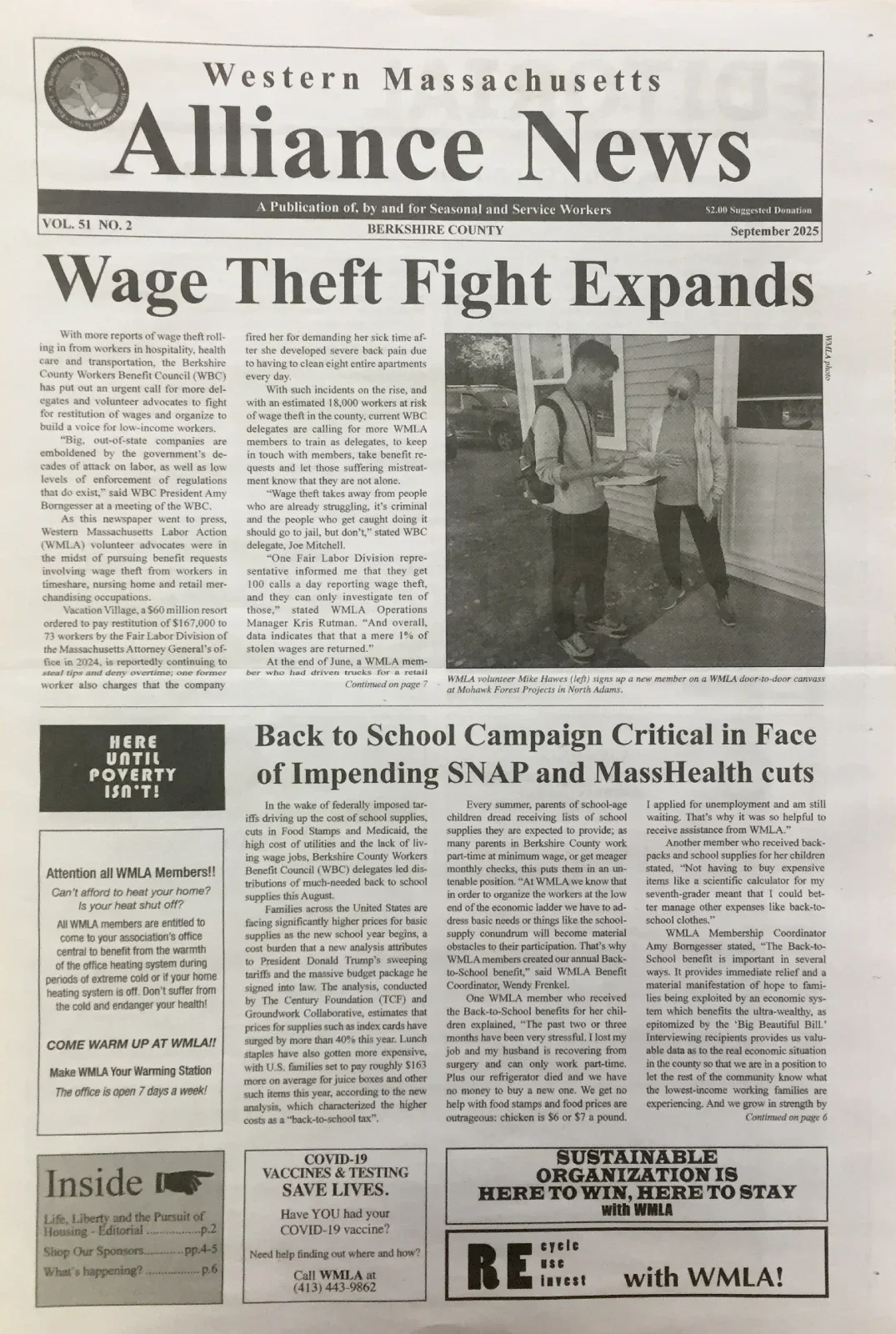
While known globally as a pastoral summer retreat for Gilded Age elites, Berkshire County was simultaneously a powerhouse of early American industrialization. For over a century, its fast-moving rivers powered hundreds of mills, giving rise to a fierce, diverse working class that fought for dignity, fair wages and union representation. 13,000 General Electric (GE) workers in the 1930s in Pittsfield successfully unionized under the United Electrical, Radio and Machine Workers of America (UE), turning Pittsfield into a union stronghold, striking decade after decade for liveable wages and fair working conditions.
WMLA’s founding in 1974 grew out of the discontent of poor service and seasonal workers in Berkshire County who saw that the successes of the union movement, while dramatic, had not fundamentally changed the economic situation of workers on the bottom of the economic ladder – and with dramatic losses in production employment and union jobs on the horizon, more and more workers were going to be restratified into this condition. In addition, government policies, such as the War on Poverty, had not addressed their dire conditions, and the Poor People’s Campaign and concomitant Economic Bill of Rights, advanced by Rev. Dr. Martin Luther King, Jr. to eradicate poverty in the United States, had not come to fruition after his assassination in 1968.
The economy in the Berkshires in the early ‘70s was making a profound transition from industrial work to service work. Companies like GE in Pittsfield and Sprague Electric in North Adams, the county’s largest employers, were phasing out their operations with General Electric heading south to take advantage of a weaker union presence, and Sprague Electric heading to Juarez, Mexico to pay its workers $10 a day, versus $20 an hour. Workers in Berkshire County were being downsized into service work, with tourism and healthcare becoming the dominant industries and the lion’s share of jobs paying minimum wage or slightly above.
WESTERN MASSACHUSETTS LABOR ACTION (WMLA) was founded based on the need for a new strategy to permanently better the conditions of the working poor: a non-government funded approach that would allow those dealing with the problems of poverty to independently organize and determine their own solutions. Below are milestones from WMLA’s history in Western Massachusetts. To get the whole story of an organizing drive that is open 365 days a year and based in Berkshire County’s lowest-income neighborhoods, you have to come in to hear it from the organizers, volunteers and members who have built it.
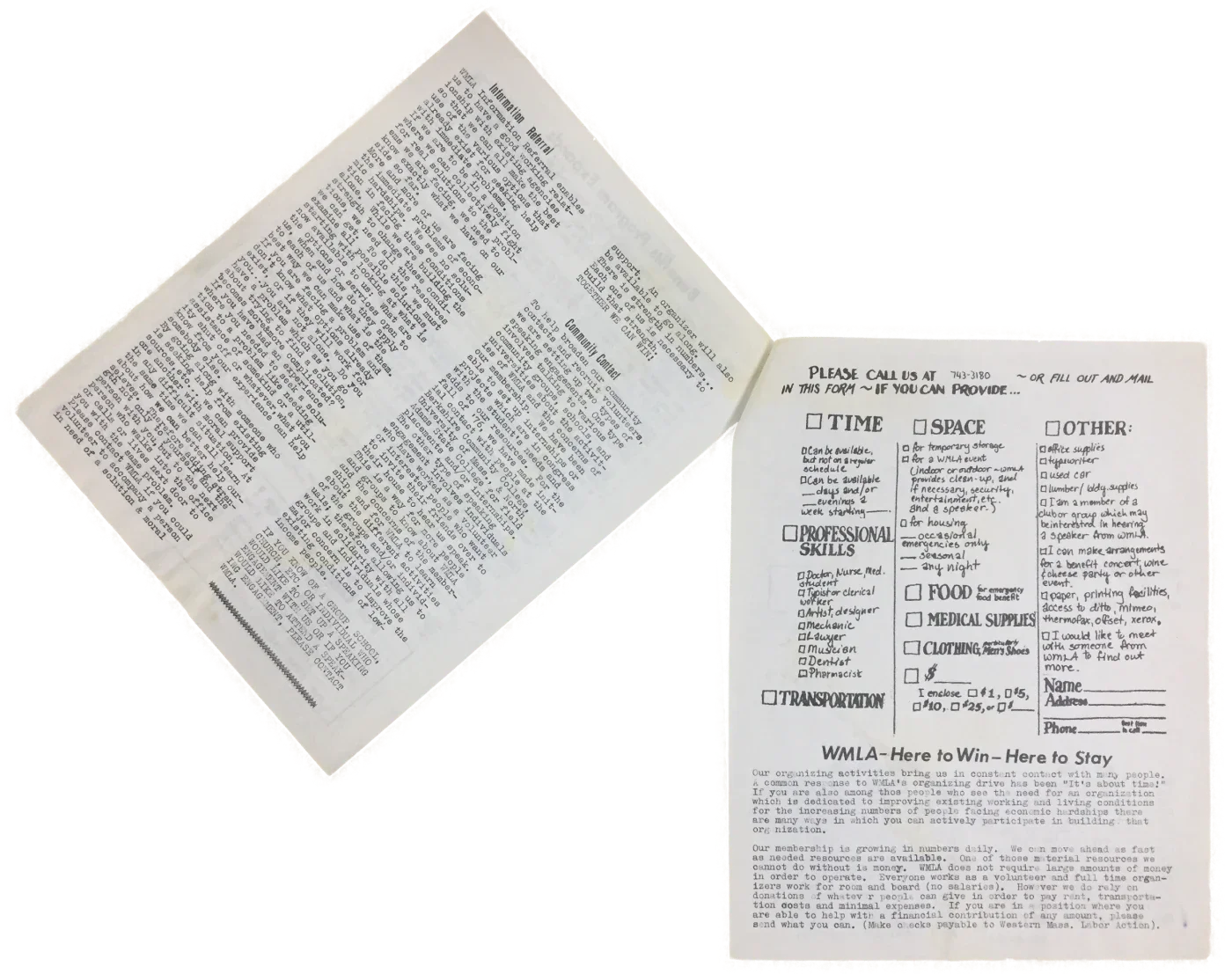
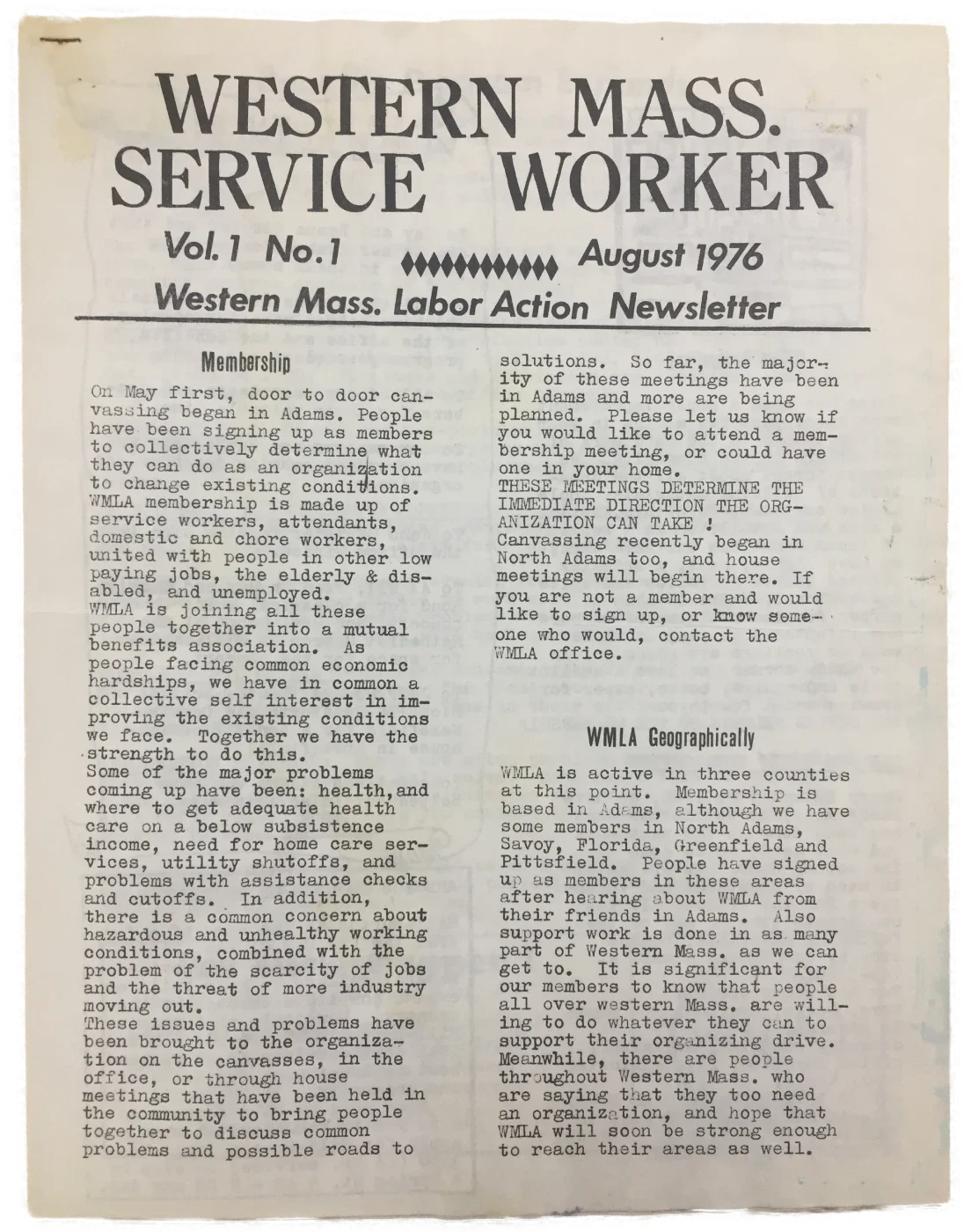
WMLA’s first newsletter, which came out in 1976, two years after WMLA was founded.
1974
WMLA’s Founding
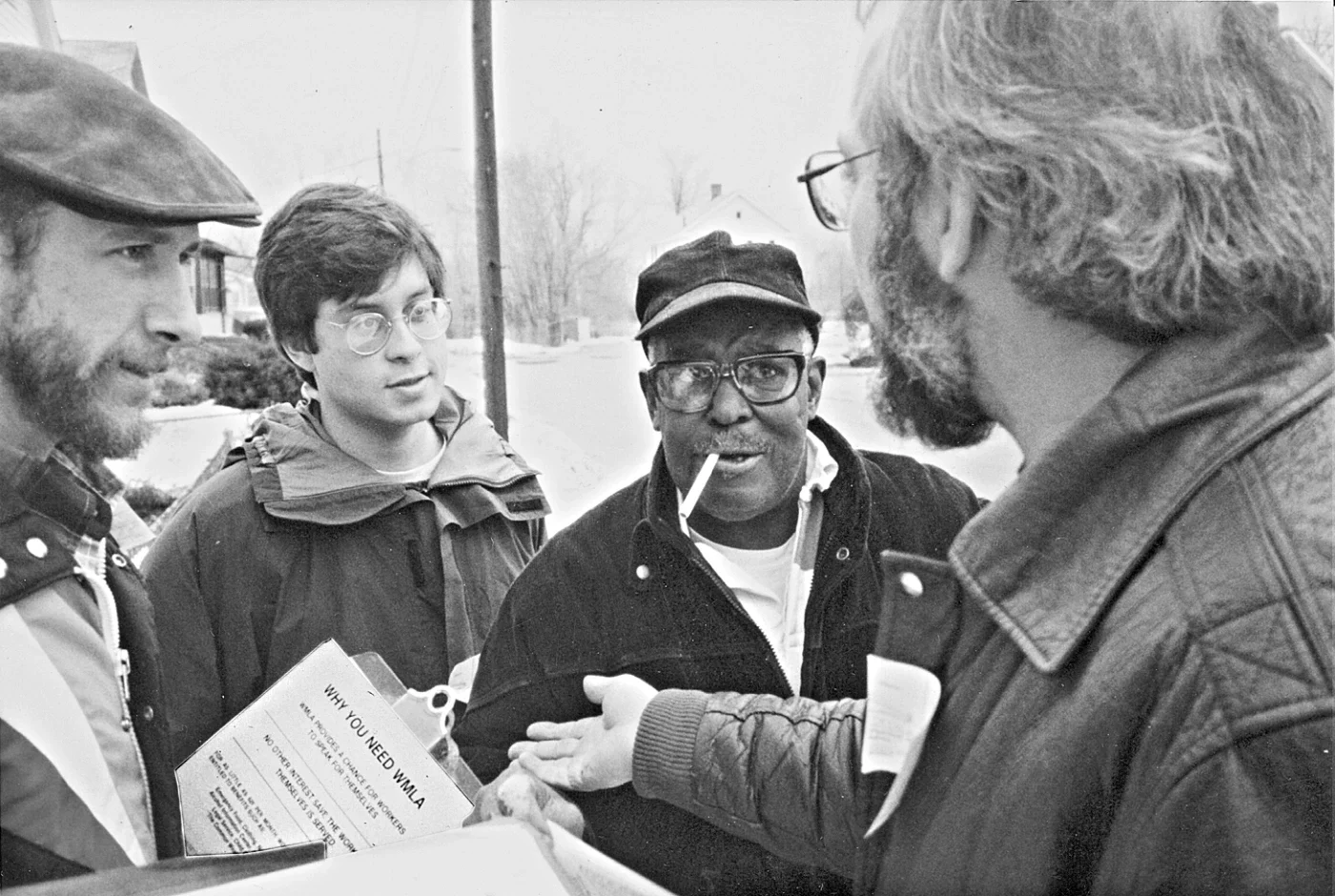
WMLA’s organizing drive began in 1974 as workers in the Berkshires were experiencing restratification: the dramatic loss of good-paying union jobs in manufacturing as General Electric began phasing out jobs at its power transformer plant, rising rates of unemployment and lower wage scales with the shift to service-sector industries. Low-paid workers needed an organization of their own that could deliver on basic necessities and provide a means of association by which service and seasonal workers in the Berkshires could advance fights and build organization to attack poverty at its root.
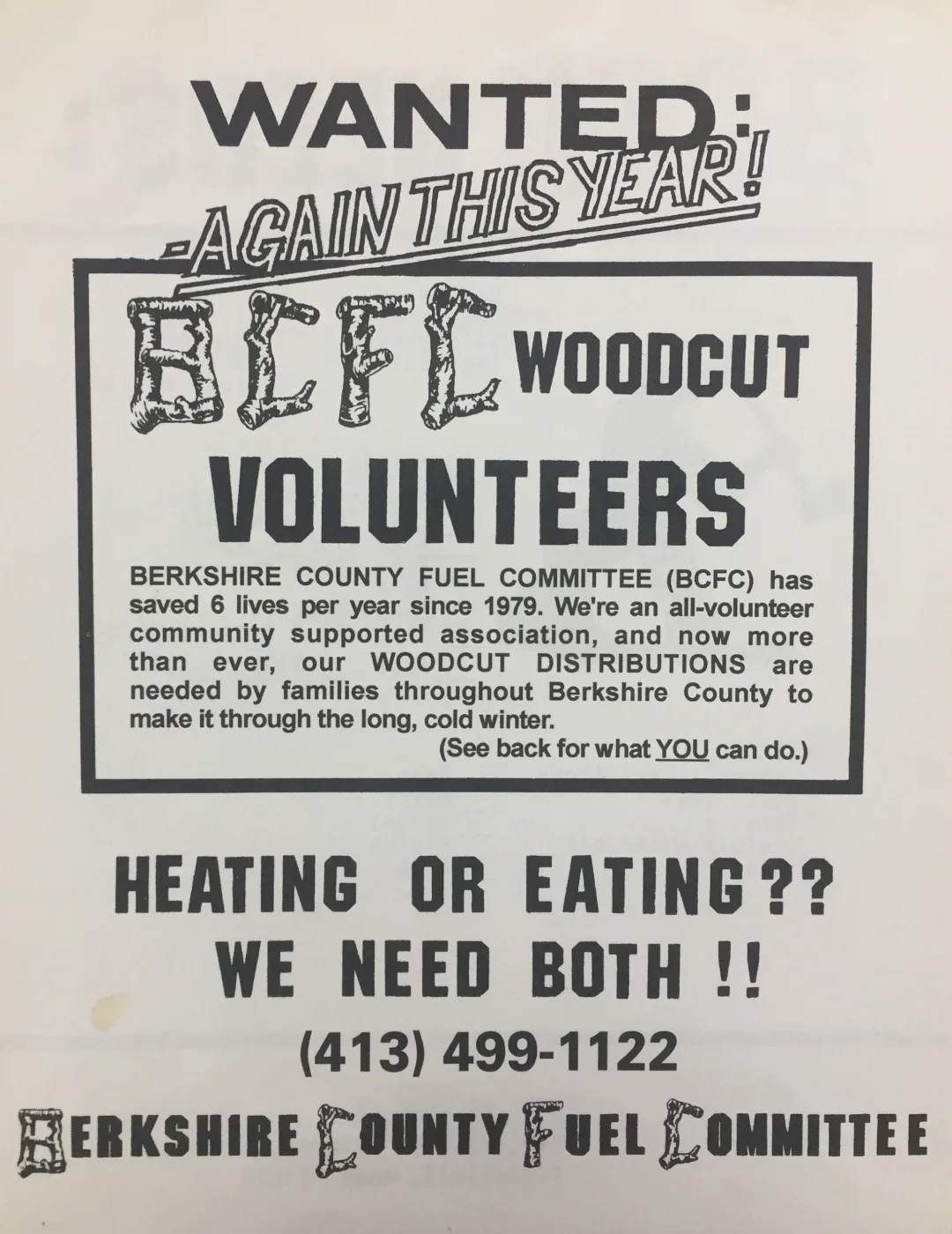
One of BCFC’s earliest flyers promoting its benefits and recruiting volunteers.
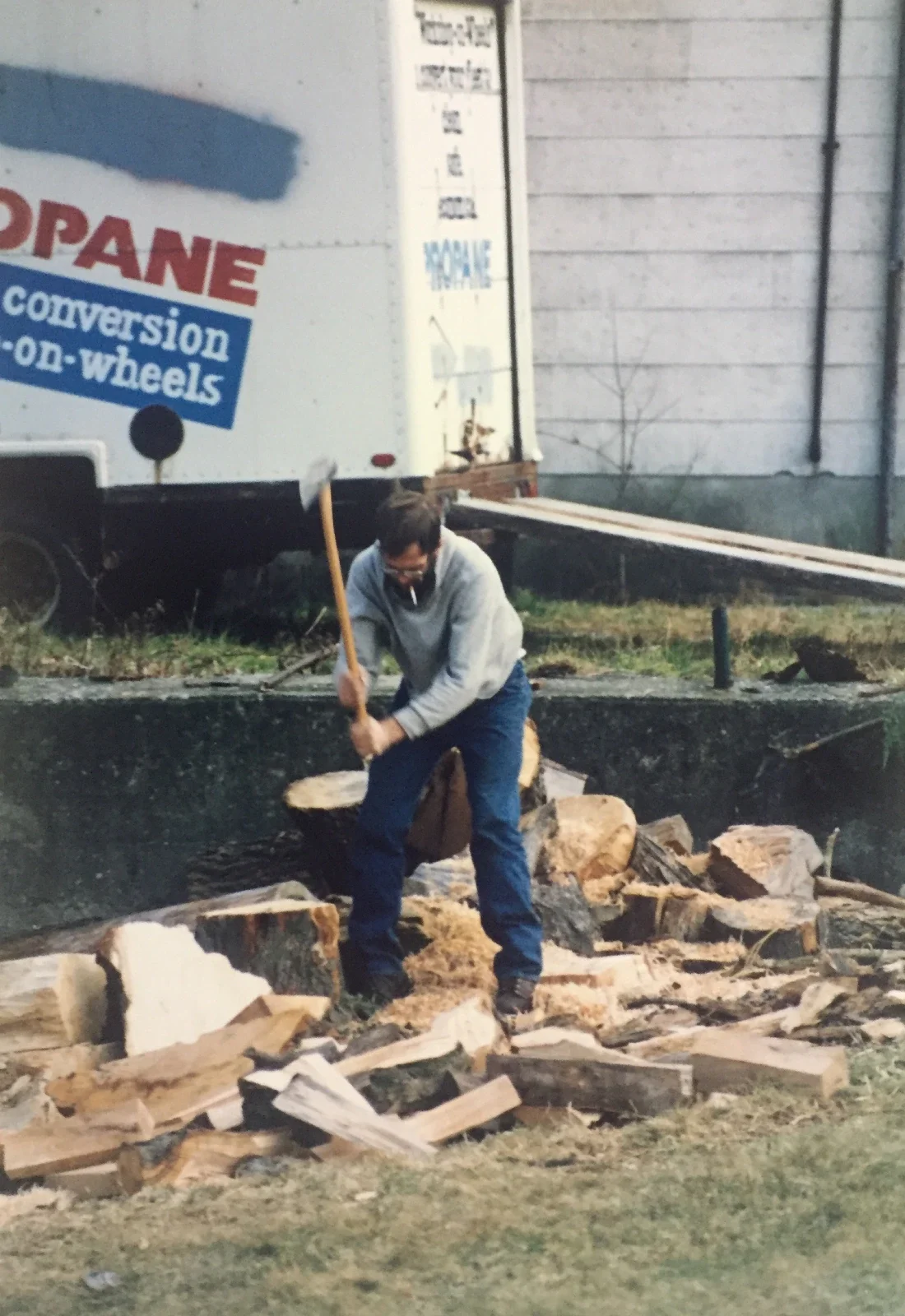
BCFC volunteer chopping wood to deliver to low-income WMLA members for heating.
1979
WMLA Launches Berkshire County Fuel Committee
In February, 1979 WMLA members through the Workers Benefit Council launched the ad hoc Berkshire County Fuel Committee (BCFC) to fight for access to heating and fuel as a right. BCFC established a supplemental heating resource benefit through organizing WMLA members and others to participate in woodcuts in order to supply emergency firewood. Participants also procured and distributed insulation and weatherizing supplies, and volunteer advocates were trained to fight utility shutoffs and assume responsibility for WMLA’s utility advocacy benefit.
In the succeeding years, BCFC advocates handled over 1,500 cases of utility service terminations. Volunteers were on the phone every day with the utility companies fighting to protect service, as well as with the Massachusetts Department of Public Utilities (DPU), the state agency tasked with regulating the utility industry and ensuring the lowest possible cost of utilities — to demand the DPU adhere to its mandate.
The next year, the state enacted the Winter Moratorium, a historic law banning utility service shutoffs during the winter months.
1985
WMLA’s Oil Bank Saves Lives with Heating Fuel
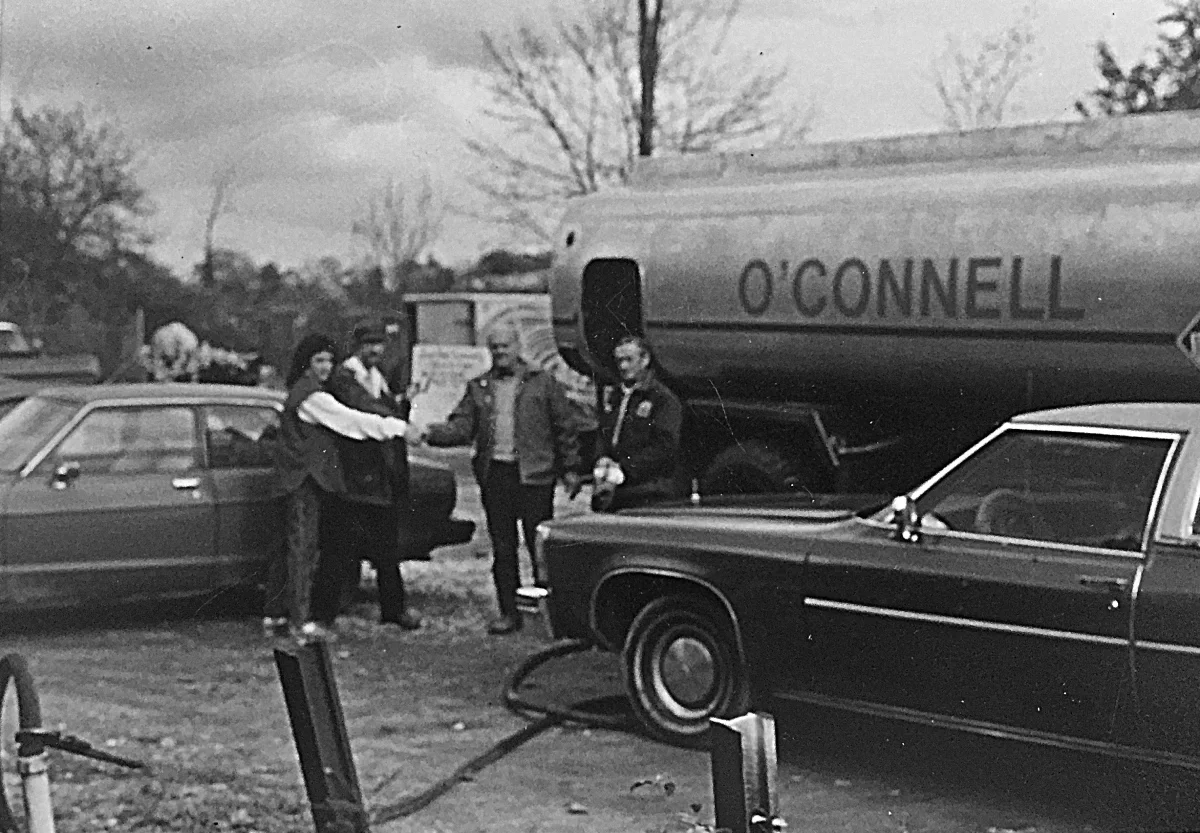
Since the winter of 1980 when 179 people froze to death in New England in their own homes, WMLA members had been discussing how to expand the benefit program to prevent members from freezing in the winter. On December 22, 1985, WMLA and BCFC announced the formation of an Oil Bank, initiated after receiving a pledge of over 500 gallons of home heating oil from the retired president of a local paper company. This launched a new benefit for members, where BCFC took the lead in collecting and distributing donated heating oil from over 100 Berkshire County residents who were transitioning over to electric heat, totaling 3,000 gallons. Volunteers stepped forward to help pick up the heating oil through organizing donations of hydraulic hoses, 55-gallon drums and drivers with pick up trucks. The heating oil was used to fill requests from WMLA members who frequently faced life-threatening conditions in the winter due to inability to afford heating oil.
WMLA’s old office was previously an Italian market, a disco club and a fish market. The physical state of the building was similar to many of the buildings on the west side of Pittsfield where the loss of union-scale manufacturing jobs had a harsh economic toll. This office was torn down and the new office was built on the same lot.
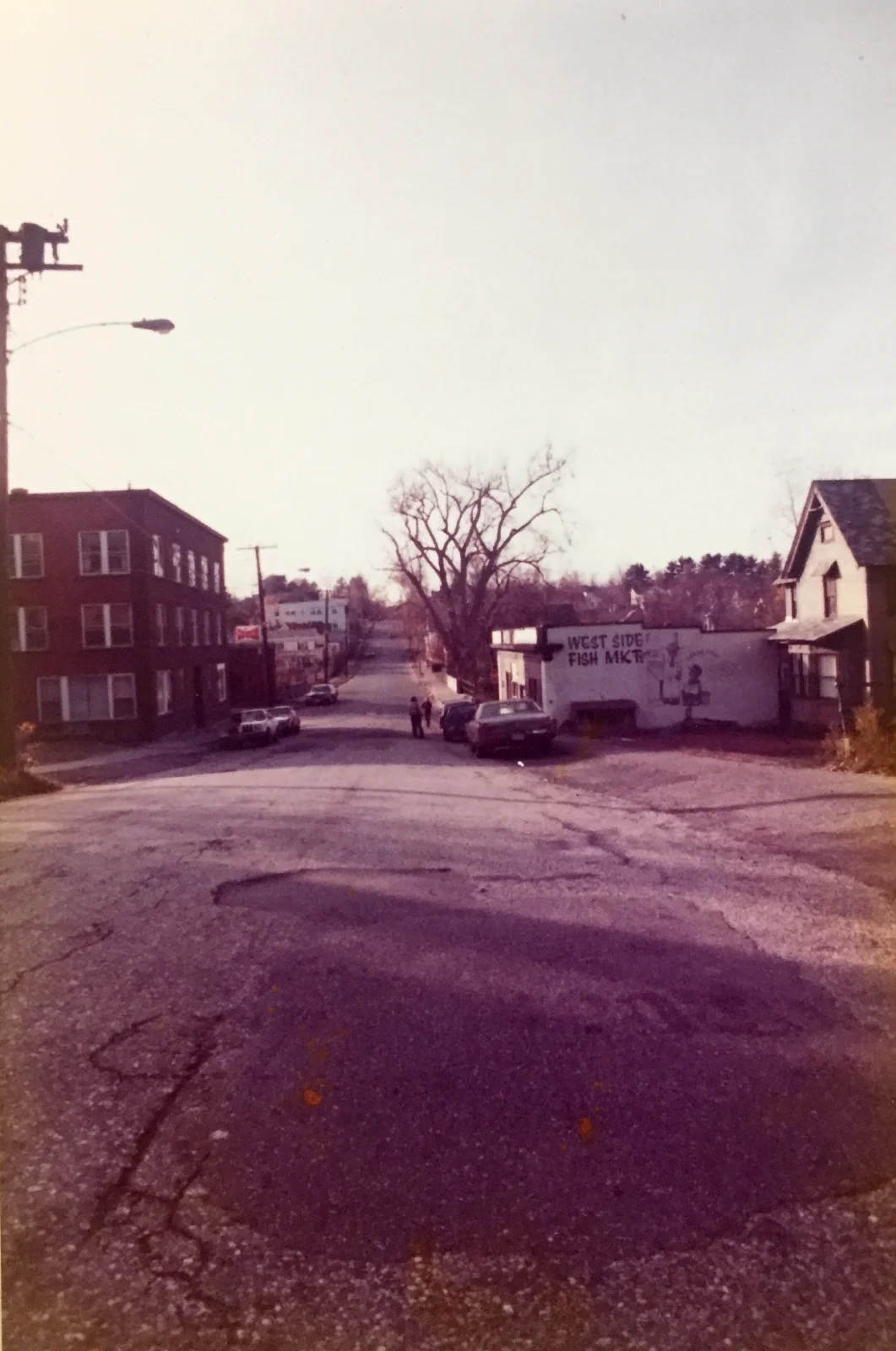
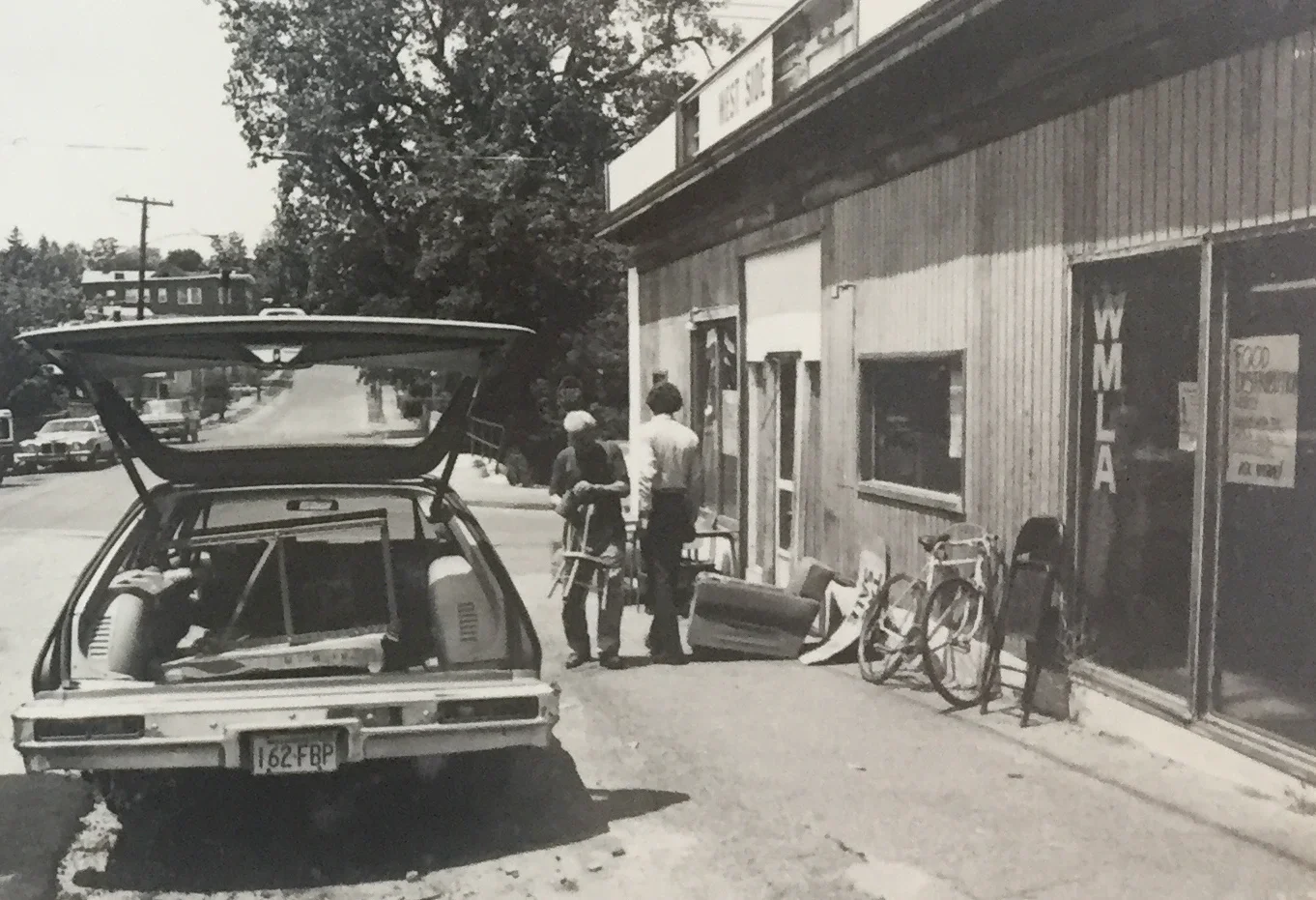
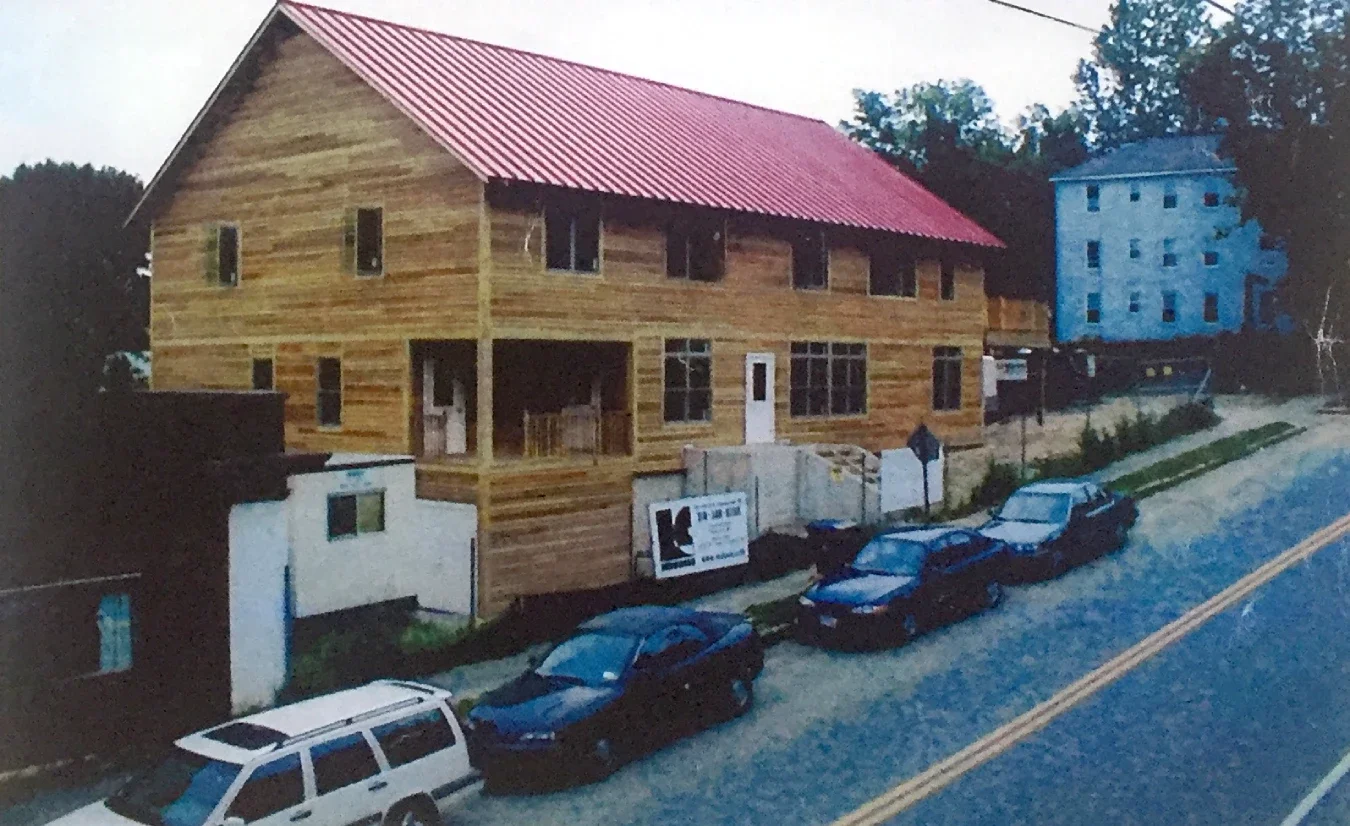
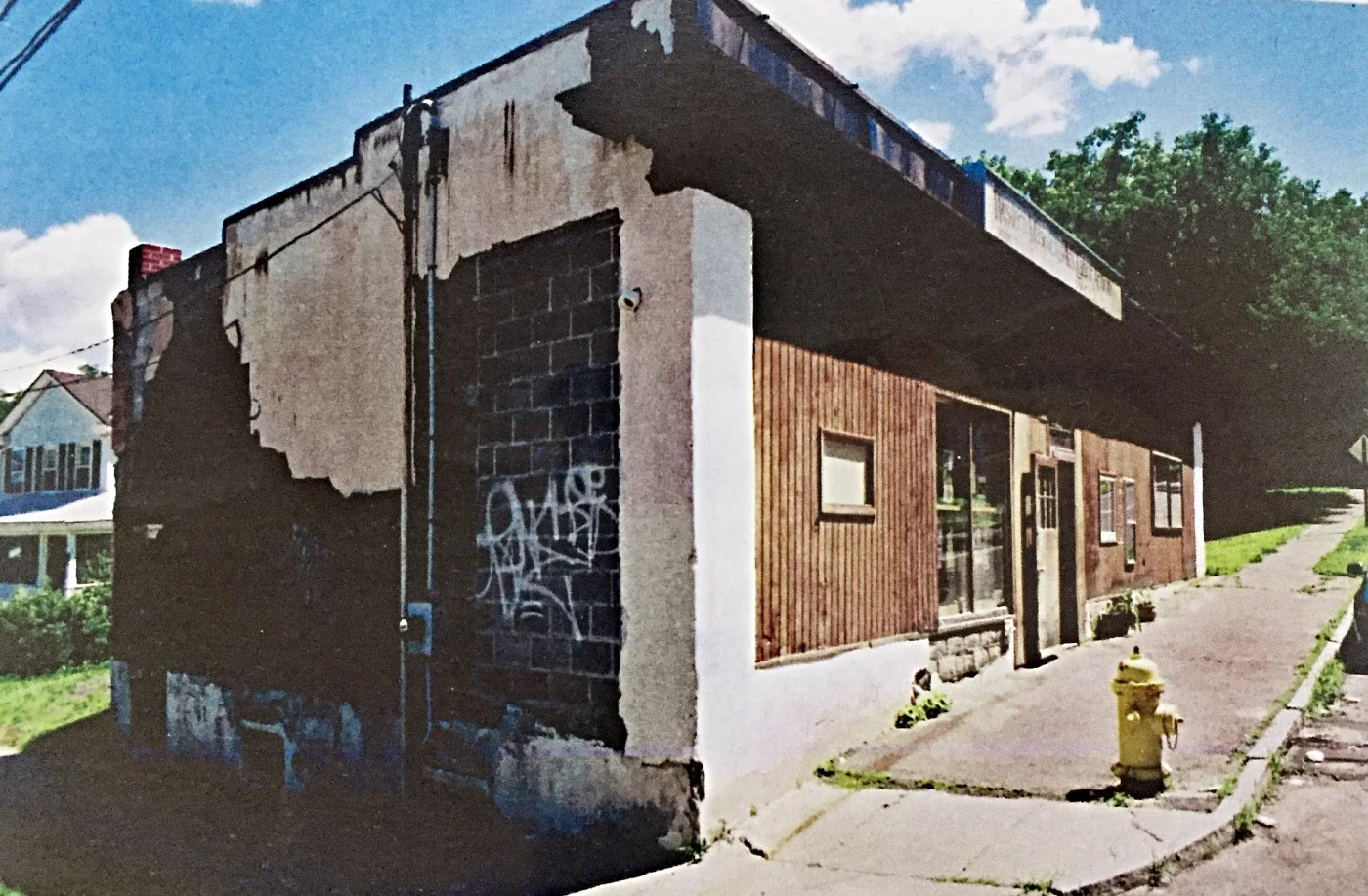
Before
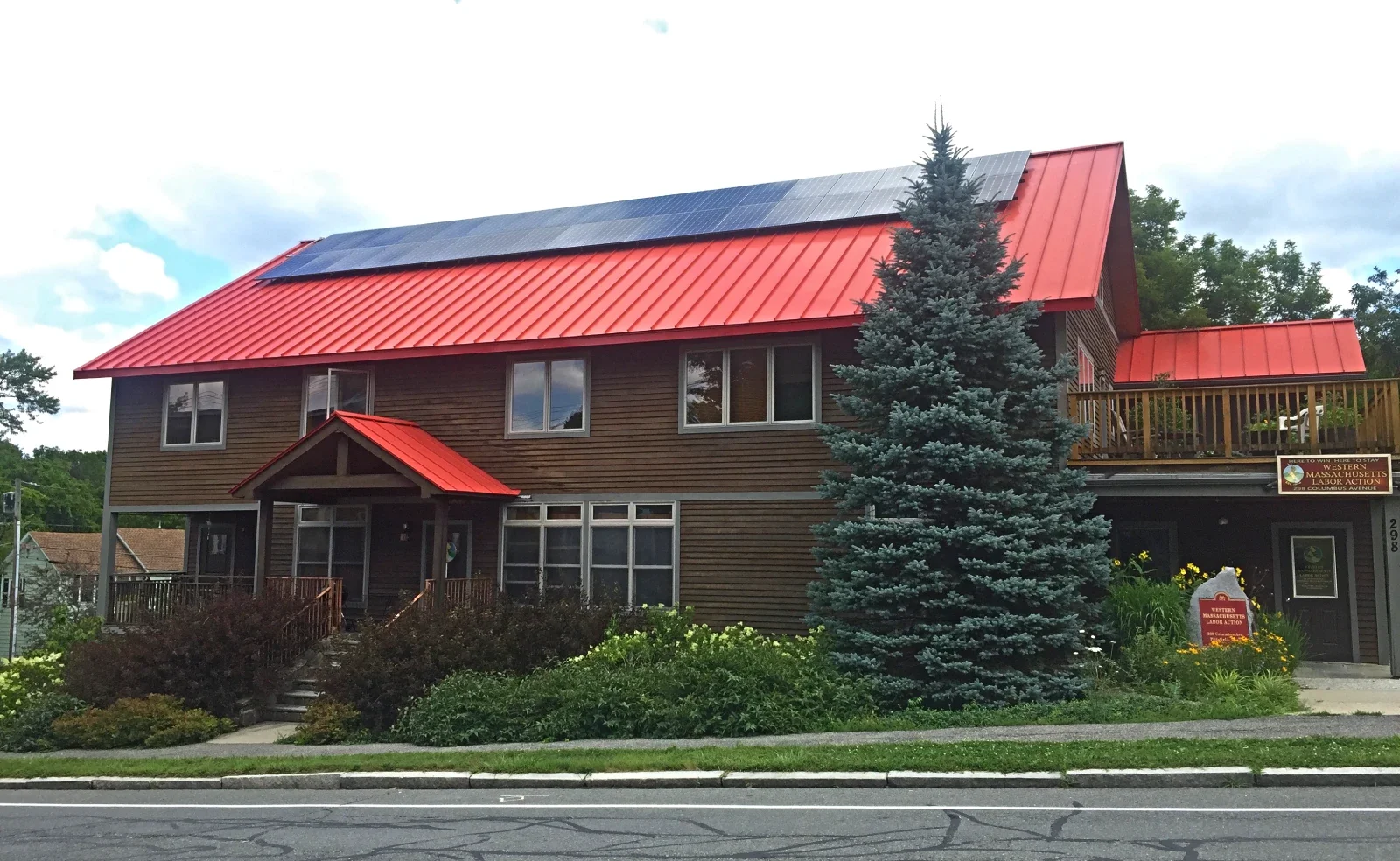
After
2007
WMLA Builds Monumental New Office from the Ground Up
In May of 2007, WMLA embarked on the construction of its new office central after operating out of a small, hardscrabble storefront for three decades. Dozens of businesses donated labor or supplies towards the building: rk MILES donated all of the Marvin windows, Berkshire Stone Works donated the granite countertop, master stonemason Renzo Del Molino spent over a month volunteering his time to install the beautiful stone veneer on the front of the building with all the stone material donated by Herrington Lumber. Williamsburg Blacksmiths donated the fabrication of the iron railing and Dicken Crane of Holiday Brook Farm donated all the ash wood logs that were used for the flooring. Eagle Lumber donated cherry, maple, and “curly” or “tiger” maple, providing enough for each room of the second floor. Indeed, every part of the building has a story behind it. In the new building WMLA has the space to operate and expand, a space where members and volunteers can work in comfort, and a building that speaks to the value of the work that WMLA members do all across the Berkshires that makes the county’s economy run.
2009
National Grid Rate Hike Fight
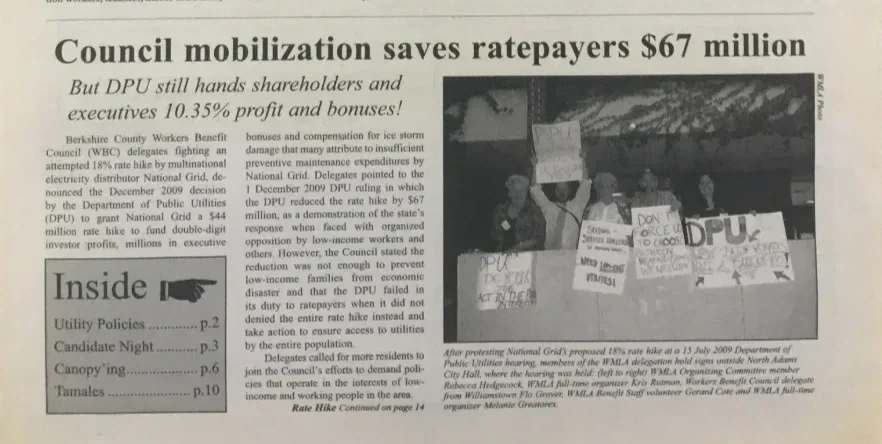
In the summer of 2009, WMLA mobilized to denounce the proposed $111 million electric rate hike by British-based company National Grid. Members of the Berkshire County Workers Benefit Council, the delegate body representing WMLA members, as well as volunteers and supporters provided testimony to the Massachusetts Department of Public Utilities (DPU) demanding the rejection of the rate hike in its entirety. In December 2009, the DPU ordered that National Grid's original $111 million request be slashed by 60%.
2014
WMLA Members and Volunteers Join Fight to Re-open North Adams Regional Hospital
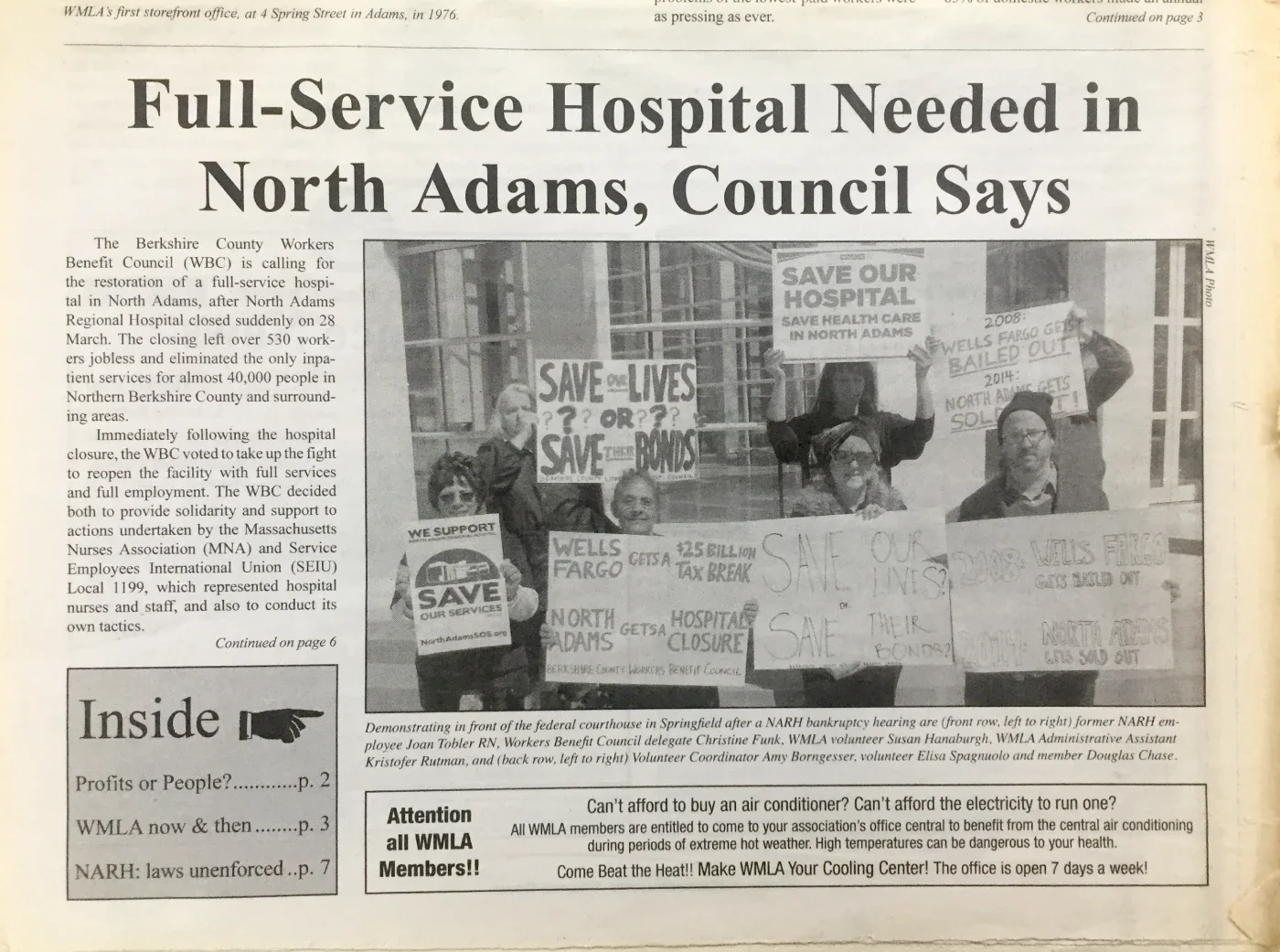
North Adams Regional Hospital (NARH) abruptly closed its doors on March 28, 2014, after its parent company, Northern Berkshire Healthcare, filed for bankruptcy following investments that went sour. The closure occurred with only three days' notice (in contravention of state and federal law) and left more than 500 workers unemployed -- and stripped the Northern Berkshire region of its sole emergency medical provider. WMLA immediately joined the fight to re-open NARH and spearheaded a campaign to win over town selectboards across the county to send letters to the Governor demanding the re-establishment of a full-service hospital. Following this advocacy, Berkshire Health Systems acquired the property and reopened it as a satellite campus providing outpatient care and emergency services. Not long after this, the facility officially reopened as a full inpatient facility.
2016
Ad Hoc Independent Voters Committee Candidates Night
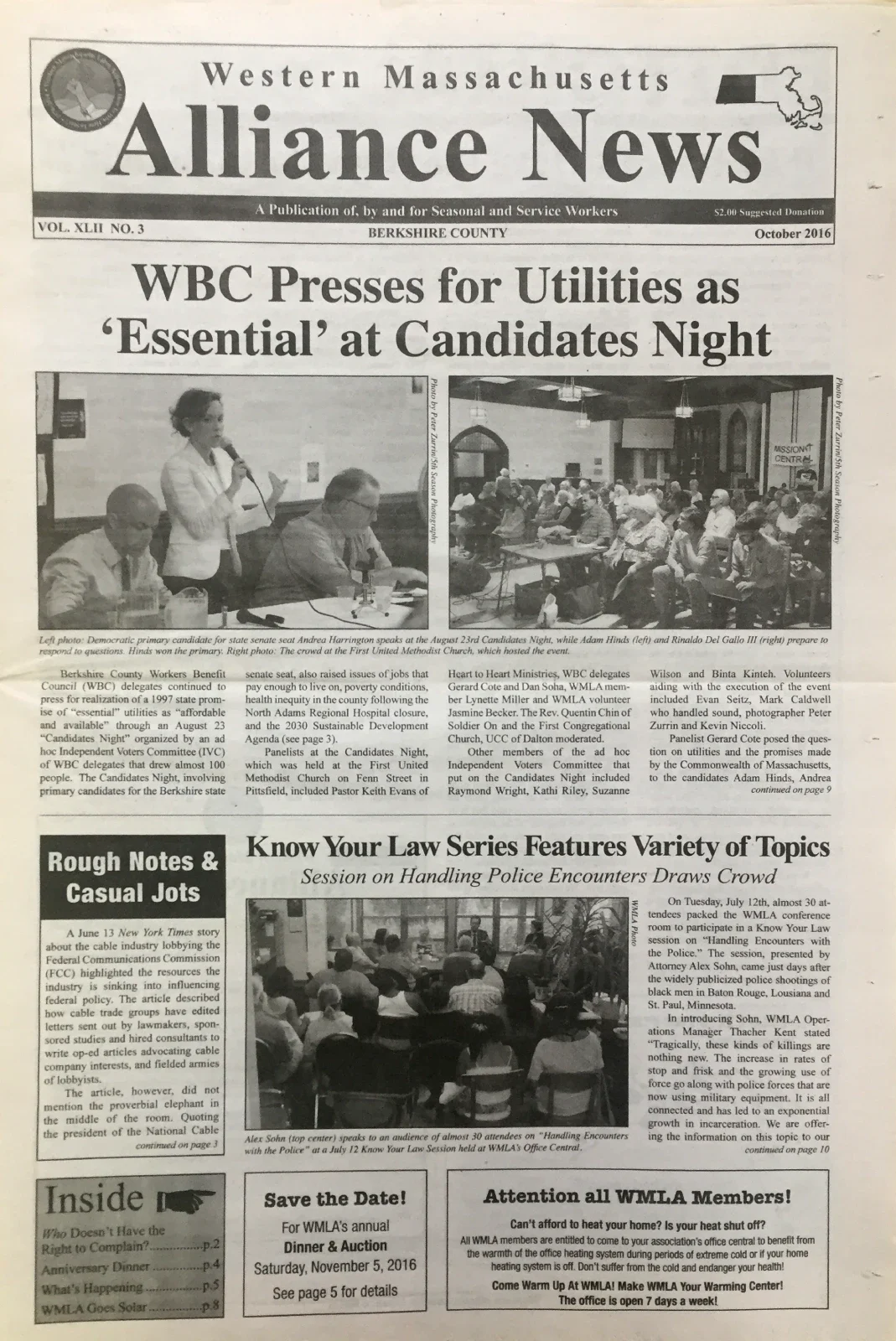
An ad hoc Independent Voters Committee (IVC) of Workers Benefit Council delegates organized a Candidates Night of candidates for the Berkshire state senate seat on August 23, 2016 that drew almost 100 people — the largest debate of the primary. The Democratic candidates in attendance were Adam Hinds, Andrea Harrington and Rinaldo Del Gallo. Panelist Lynette Miller, a WMLA member described the struggles of Berkshire residents with poverty conditions and posed a question to the candidates:
“All too often, official policies and practices have worsened poverty. For example, widespread incarceration and responding to the symptoms of poverty and hopelessness through punitive action have taken breadwinners out of our communities, making these communities even less economically stable. How do you think that poverty can be changed, and what will you do towards these ends?”
The Candidate Night was a unique opportunity for the lowest-income working residents of the Berkshires to be able to directly ask questions of their future representative pertaining to the struggles they faced on an everyday basis. The Candidate Night was also an opportunity to let the candidates know that there was an organized community that demanded answers to these problems.
2024
Wage Theft Victory
In the spring of 2024, a housekeeping worker from the timeshare resort Vacation Village signed up as a WMLA member and made a legal benefit request because of six months of stolen tips and unpaid overtime. A WMLA volunteer advocate called the Fair Labor Division of the Attorney General’s Office of Massachusetts and requested that the Division conduct an investigation. The member received restitution of $3,500, after which the Division commenced an investigation across the entire timeshare and ruled that Vacation Village pay back $167,000 in unpaid wages to the 73 workers, as well as pay a $69,000 fine.